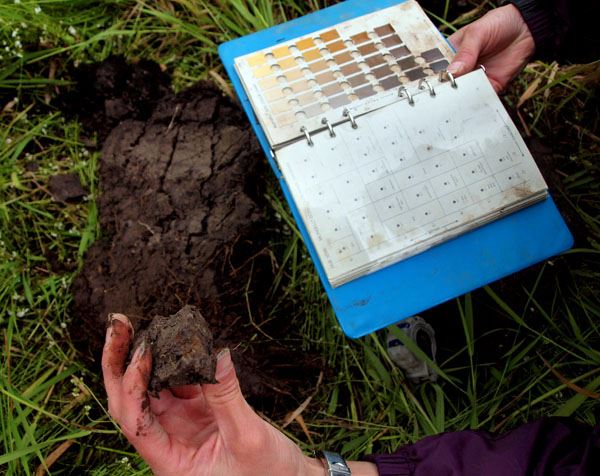
Using Field Indicators for Hydric Soils
You will learn the basic processes that take place in saturated soil, and how to “read the story” in a soil profile. The training includes an introduction to identifying layers, distinguishing concentrations and depletions, and preparing hydric soil descriptions from soil profiles. Each student will have a chance to describe soil profiles and apply the field indicators to their notes. Also, you will learn how to use the Hydric Soil Indicators in the Regional Supplements to the Corps of Engineers Wetland Delineation Manual.
This workshop includes a virtual day on May 21st from 10 AM - 3 PM and an in-person field day on May 22nd from 9 AM - 4 PM in Thurston County. The program will follow up with more details about the field day in May. Lunch will be provided during the field day (11 CM AICP Credits/ CEP Points)
Suggested class materials to bring:
- A copy of the Munsell Soil Color Book
- U.S. Army Corps of Engineers wetland delineation manual regional supplement (Western Mountains, Valleys, and Coast and Arid West Supplements) or have access to a digital copy (https://www.usace.army.mil/Missions/Civil-Works/Regulatory-Program-and-Permits/reg_supp/)
- Knife for cutting soil (i.e., one you don’t mind ruining)
- Spray bottle with water
- Hand lens
- Clip board
- Measuring tape
- Shovel (18 inch blade recommended)
Please reach out to Sara Brostrom (bros461@ecy.wa.gov) if you require an accommodation for this training (audio, visual, mobility, or other). Additionally, we can offer a couple of scholarship to cover the registration fees with each training. Please reach out if you need a scholarship in order to participate in the training.
Instructors
Leah Beckettis a Wetland Specialist with Ecology working out of the Northwest Region Office. Prior to Ecology, Leah had roles with city, state, and federal governments in wetlands and hydrological research, and taught biology and ecology courses at the undergraduate and graduate level. She earned a Ph.D. and a M.S. in Wetland Ecology from the University of Maryland and a B.S. in Ecology from Brevard College.
Chris Luerkens works in Ecology’s Bellingham Field Office, where he has been a shoreline and wetlands permit specialist since 2018. His work is largely focused on reviewing permits, and providing technical assistance to local jurisdictions, including Ordinary High Water Mark determinations. Chris has a BS in environmental science from WWU and has been working in natural resource management since 2005. His background includes work in water quality, fisheries, and local government as a planner.
Lizzie Carpis a Wetland/Shoreline Specialist for Ecology’s Southwest Region. She reviews wetland and shoreline permits and helps local governments implement their shoreline regulations and review wetland projects. Before she came to Ecology, Lizzie was a soil scientist with the Natural Resources Conservation Service.
Neil Molstad is a Regional Wetland Specialist with the Washington State Department of Ecology. He worked as a soil scientist, both as a private consultant and for the federal government, before joining Ecology. Molstad has a MS degree in soil science, with soil morphology and genesis emphasis, from Iowa State University, and has obtained various national and state certifications and licenses as a professional soil scientist over his career. He has developed and provided training on soils, with an emphasis on hydric soil identification, to both the general public and specialized audiences.
